Center for Instructional
Innovation and Assessment
INNOVATIVE TEACHING SHOWCASE
2002
2003

Institutional Goals
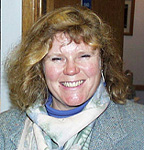
Listed below are selected learning outcomes in the area of critical thinking that Western Washington University is actively integrating into its curriculum. Each learning outcome is listed with its definition, along with a description of how Angie Harwood's teaching strategies meet each of these student learning outcome goals.
Critical Thinking
| Learning Outcomes | Definition | Course Outcomes |
|---|---|---|
| Identification | Accurately identifies and interprets evidence. | Students identify a service-learning option at a local middle school that matches their educational and personal interests. |
| Alternative Consideration | Considers major alternative points of view. | Students are exposed to the perspectives of current social studies teachers and their middle school students. Dr. Harwood's students discover the level of work and maturity of middle school students. |
| Accurate Conclusions | Draws warranted, judicious, non-fallacious conclusions. | Students connect with middle schoolers en route to and from their service activities and gain valuable insights about their level of learning. They also review the middle schoolers reports and provide feedback that reflects upon their grades. |
| Justification | Justifies key results and procedures, and explains assumptions and reasons. | Students write reflective journals throughout the quarter and evaluate their own participation and progress. |
Source: Adapted from Western Washington University's Learning Outcomes for Writing II.
ISSN: 2374-9415
 Unless otherwise noted, the Innovative Teaching Showcase created by the Center for Instructional Innovation and Assessment at Western Washington University is licensed under a Creative Commons Attribution-NonCommercial-ShareAlike 4.0 International License.